
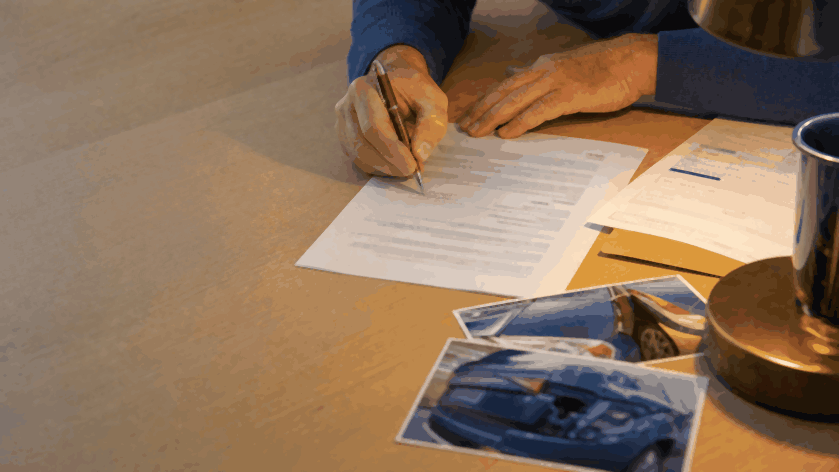
Using the Diminished Value Demand Letter Template
When another driver is at fault for the accident, mail the letter to that driver's insurer. Most states let you file this, which is called a third-party claim. Your own insurer will not cover this loss in most states. Each state also has a time limit for filing. Both of those appear for your state in the table of state rules. Send the letter to the adjuster. That is who handles your claim at the insurance company. The letter is a plain business document, not legal guidance.
Papers That Go With Your Letter
Send copies rather than the originals. Hold on to the originals in a safe spot at home. A good file has:
- both the repair estimate and your final repair bill
- pictures of the damage, before any repairs
- a vehicle history report listing the crash (companies such as Carfax sell this record of the car's past)
- an appraisal report (a car value expert's written value), or a printed copy of your estimate from our calculator
The first offer from many insurance companies uses the 17c formula. This rule is fixed. It begins with 10% of what the car was worth before the accident. If the damage was small or the car has many miles on it, the amount goes down. Your paperwork can back up a request for more money.
How to Send the Letter, Step by Step
- Use USPS Certified Mail to send it. You get a receipt, and a signature is required at delivery. That proves delivery. Emailing a copy to the adjuster also works. Hold on to a copy of the letter, any papers you sent, and the mail receipts.
- Allow time for a response in writing. Your letter requests a reply from the company within 30 days. Some states have deadlines of their own. For Washington, the insurer has 30 days to finish its review; if it needs longer, it must explain the delay to you in writing. In Georgia, if you sent your letter by certified mail, the other driver’s insurer has 60 days to answer.
- Often the first offer is low, and you can write back. Often the first offer is just where things begin. Use your documents to address each point, and repeat the amount you are asking for.
- Take your time reading any paper that closes your claim before you put your signature on it. That paper is called a release. After you sign, you give up the right to request more money for the same crash.
- If no reply comes, get the adjuster on the phone and ask for the decision in writing. Filing a complaint with your state's insurance department is another path. That office watches over insurance companies for the state. When that does not succeed, small claims court (a simple local court for smaller dollar disputes) is an option, as is getting a lawyer.
From the first phone call to receiving payment, the diminished value claim guide steps you through the entire claim.